When people talk about sustainability in buildings, the conversation often gravitates towards the obvious: solar panels on the roof, an air source heat pump in the plant room, a better EPC rating. These things matter, but they only tell part of the story.
The reality is that a building’s true environmental performance is shaped by dozens of mechanical engineering decisions made long before anyone moves in. From how water flows through a drainage network to the temperature at which a heating system operates, every choice has a consequence for energy consumption, carbon emissions, and long-term running costs.
At Balance Mechanical, sustainability is not a box to be ticked at planning stage. It is a discipline that runs through every aspect of our work. Here is what that looks like in practice.
Low-temperature heating systems: smaller delta, bigger impact
Traditional heating systems were designed to operate at high flow temperatures, typically 70 to 80 degrees Celsius. This made sense when fossil fuel boilers were the norm and energy was cheap. In a net-zero world, those assumptions no longer hold.
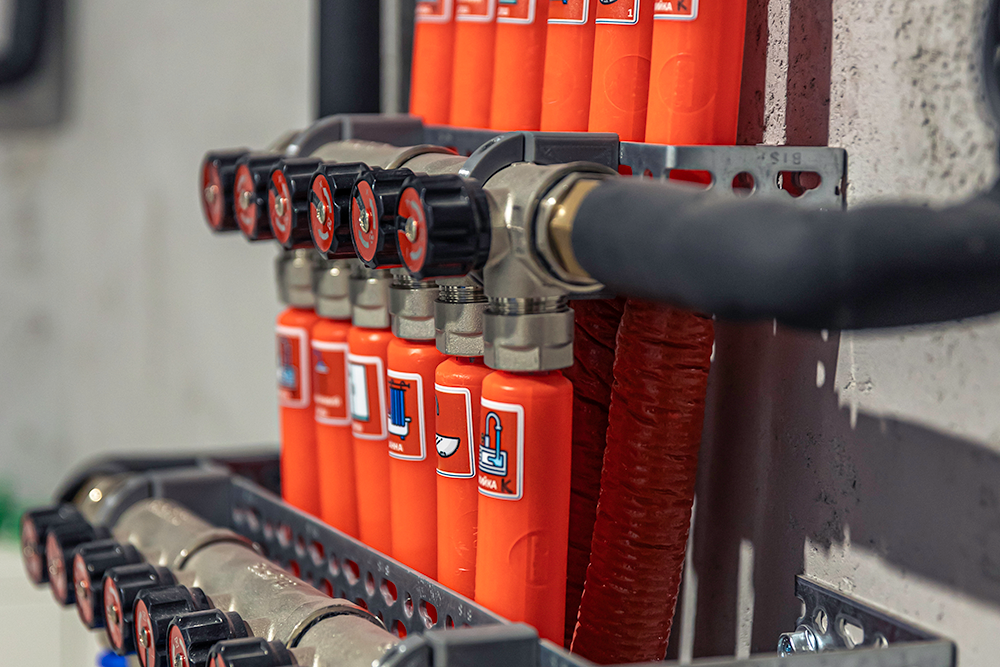
Low-temperature heating systems, operating at flow temperatures of 45 to 55 degrees or lower, are fundamentally better suited to modern buildings and modern heat sources. Heat pumps, for example, operate most efficiently at low flow temperatures. The closer the flow temperature is to the ambient source temperature, the higher the coefficient of performance and the less electricity the system consumes for every unit of heat delivered.
Designing for low-temperature operation requires careful thought at every stage. Emitter sizing, pipe layout, zone control, and system balancing all need to be calibrated for a lower delta T. Done correctly, the result is a system that runs more efficiently, costs less to operate, and is future-proofed for the heat sources that will define the built environment over the coming decades.
Smart HVAC: ventilation that responds rather than runs continuously
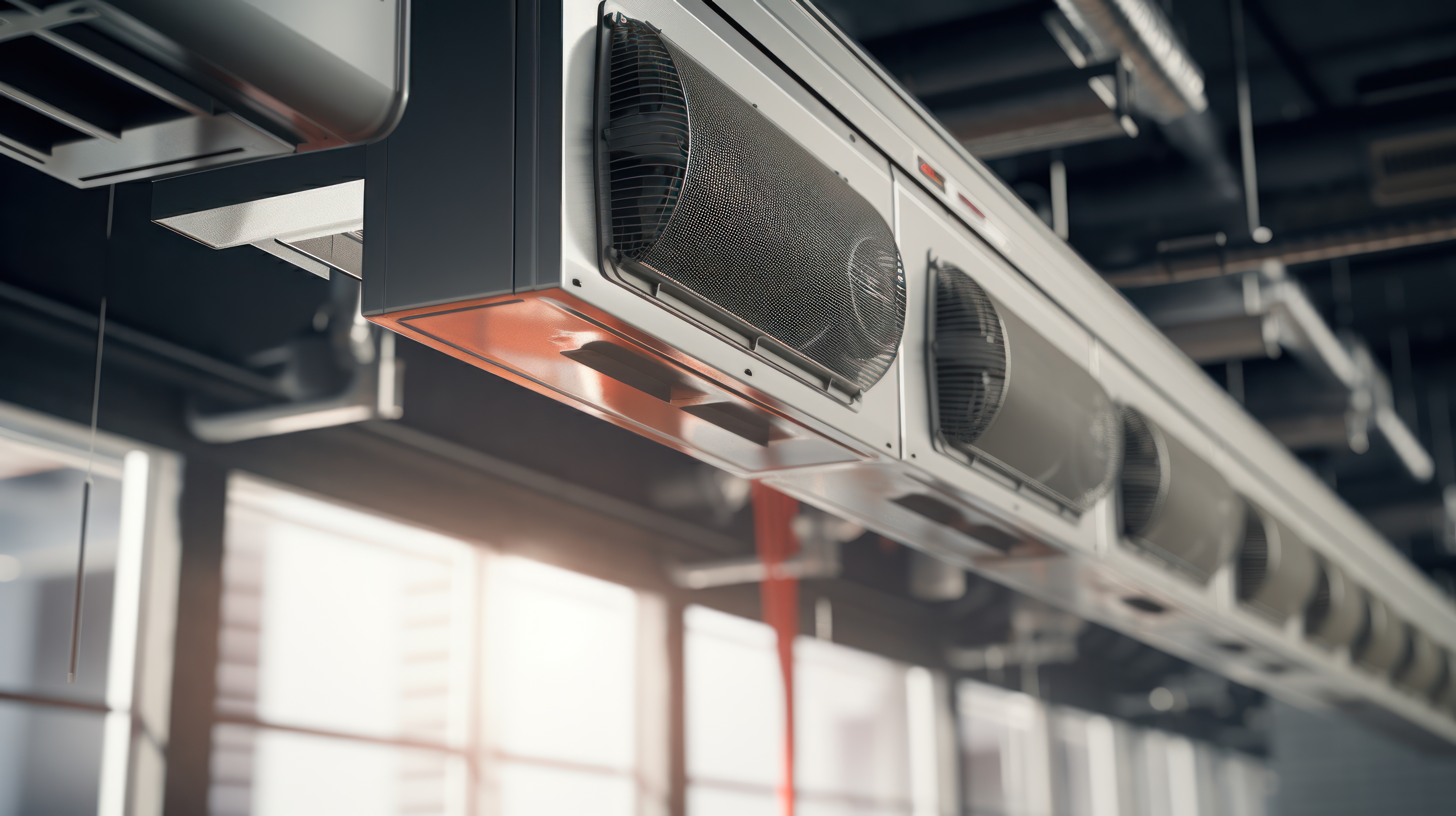
Ventilation accounts for a significant share of a building’s energy consumption. In residential schemes, poorly designed or oversized ventilation systems can run continuously at full capacity regardless of actual occupancy or air quality, wasting energy and adding unnecessarily to residents’ utility bills.
Demand-controlled ventilation changes this equation. By using CO2 sensors, occupancy detection, and humidity monitoring to modulate airflow in real time, smart HVAC systems deliver fresh air only where and when it is needed. In a multi-unit residential building, the cumulative energy savings compared to a constant-volume system can be substantial.
The case for smart HVAC goes beyond energy savings alone:
- Improved indoor air quality, with ventilation matched to actual occupancy levels
- Reduced wear on mechanical components through more measured operation
- Better compliance with Part F of the Building Regulations and evolving air quality standards
- Lower service charges for residents, which increasingly influences purchaser and tenant decisions
Heat recovery ventilation (MVHR) adds another dimension, reclaiming the thermal energy in extracted air before it leaves the building. In well-insulated new builds, MVHR can meet a significant proportion of a dwelling’s heating load through recovered heat alone.
Drainage design: efficiency starts underground
Drainage is rarely the first thing that comes to mind in a sustainability conversation, but it deserves more attention than it typically receives. The way a building manages water, both foul and surface, has meaningful implications for efficiency, resilience, and environmental impact.
Greywater recycling systems, for instance, capture water from baths, showers, and washbasins and treat it for reuse in toilet flushing. In a large residential development, greywater recycling can reduce mains water consumption by 30 to 40 per cent per dwelling. As water scarcity becomes a more pressing concern and water costs rise, this kind of system increasingly makes financial as well as environmental sense.
Rainwater harvesting offers similar benefits for surface water management, reducing the volume of runoff entering the combined sewer network and lowering the risk of sewer surcharge and flooding during heavy rainfall events. For schemes seeking BREEAM credits or looking to satisfy drainage conditions imposed by planning authorities, this is increasingly becoming a standard design consideration rather than an optional extra.
Pipe sizing, gradient, and layout also influence drainage efficiency. Properly sized drainage networks reduce the need for pumped systems, which consume energy continuously. Where gravity drainage is achievable, it should always be the default.
Energy centres: the case for centralised heat generation
For larger residential and mixed-use developments, centralised energy centres offer significant advantages over individual dwelling-level heat sources. By consolidating heat generation in a single plant room, developers and building operators can take advantage of economies of scale, improved monitoring, and easier maintenance access.
Heat networks fed by a central energy centre can be decarbonised over time as the heat source evolves. A development built today with a high-efficiency gas CHP or heat pump at its core can transition to a lower-carbon heat source in the future without any changes to the in-dwelling distribution network. This future-proofing argument is increasingly persuasive to developers navigating uncertain regulatory timelines.
Energy centres also allow for more sophisticated monitoring and optimisation. Building management systems connected to a centralised plant room can analyse consumption patterns, flag inefficiencies, and adjust system operation automatically, delivering ongoing energy savings throughout the lifetime of the building.
Water treatment: protecting efficiency over the long term
The efficiency of a heating system at the point of installation is not the efficiency it will deliver five years later if water quality is neglected. Scale, corrosion, and biological contamination all degrade system performance over time, increasing energy consumption and shortening the operational life of components.
A properly designed and maintained water treatment regime, including chemical dosing, filtration, and regular monitoring, protects the investment made in mechanical systems and ensures that efficiency is maintained throughout the building’s life. This is particularly important in low-temperature heating systems, where the temperature conditions can be more favourable to biological growth if water quality management is insufficient.
The whole-building perspective
The most sustainable buildings are not those with the most impressive individual features. They are the ones where every system has been designed with an understanding of how it interacts with every other system. A low-temperature heating network only delivers its full potential if the building fabric is well insulated. Smart ventilation only works as intended if controls are integrated with the wider building management system. An energy centre is only as good as the heat distribution network it feeds.
This is why the mechanical building services specialist you appoint matters. At Balance Mechanical, we bring a whole-building perspective to every project. We work collaboratively with architects, structural engineers, electrical contractors, and principal contractors to ensure that mechanical systems are designed and installed as an integrated whole, not as a series of disconnected components.
Sustainability in mechanical building services is about much more than the boiler. It is about every pipe, every duct, every sensor, and every design decision that determines how a building performs for its occupants and for the planet over the decades ahead.
Want to improve the sustainability performance of your next development?
Our team of mechanical building services specialists would be happy to discuss your project and explore how we can help you achieve your energy and sustainability goals. Call us on 01483 378033 or email info@balmech.co.uk to get in touch.